The programme
The A47 east of Norwich had one of the worst safety records of any A-road in the UK. Between 2014 and 2018, 42 collisions were recorded on a single stretch between Blofield and North Burlingham. That is nearly nine per year.
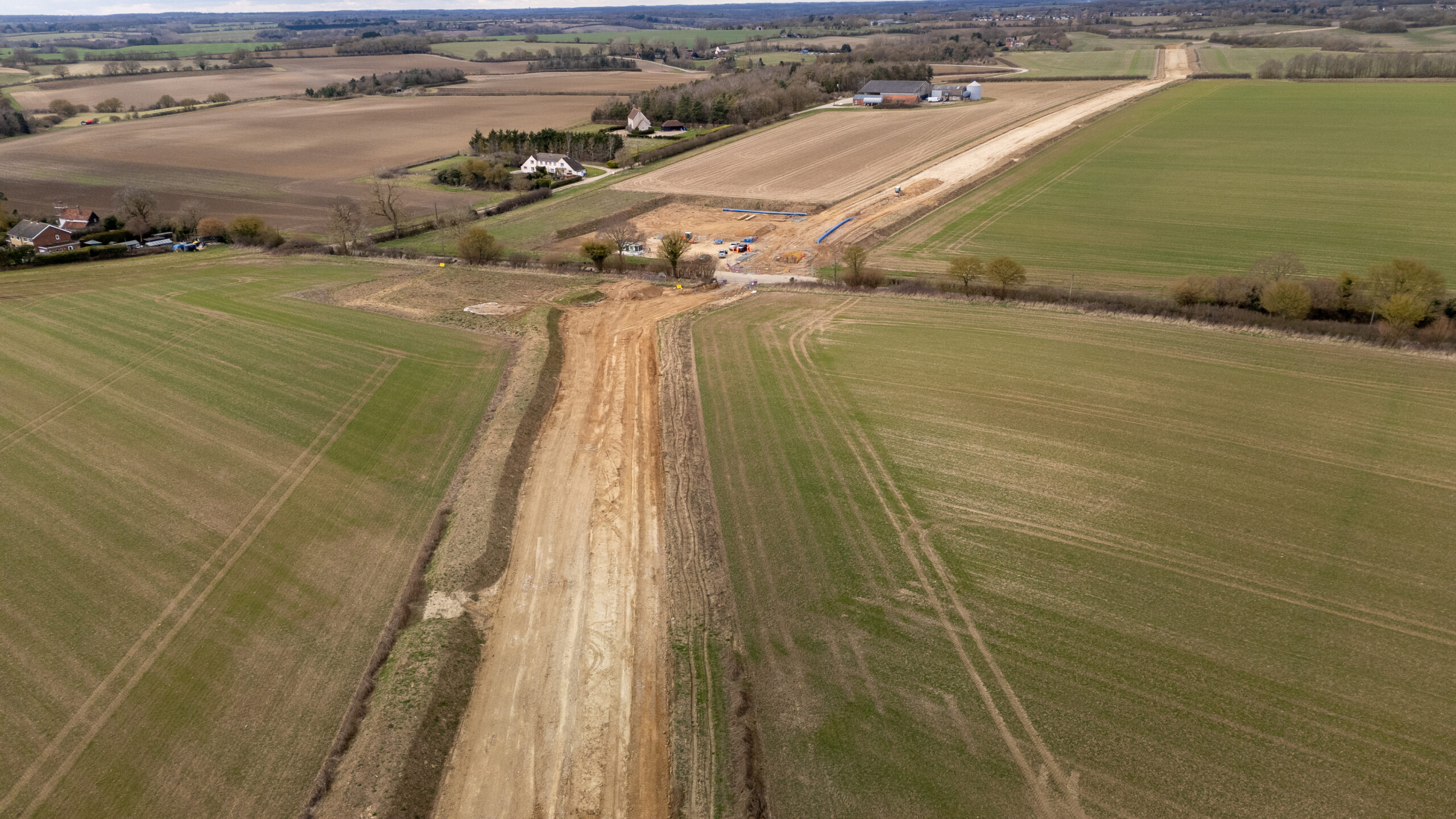
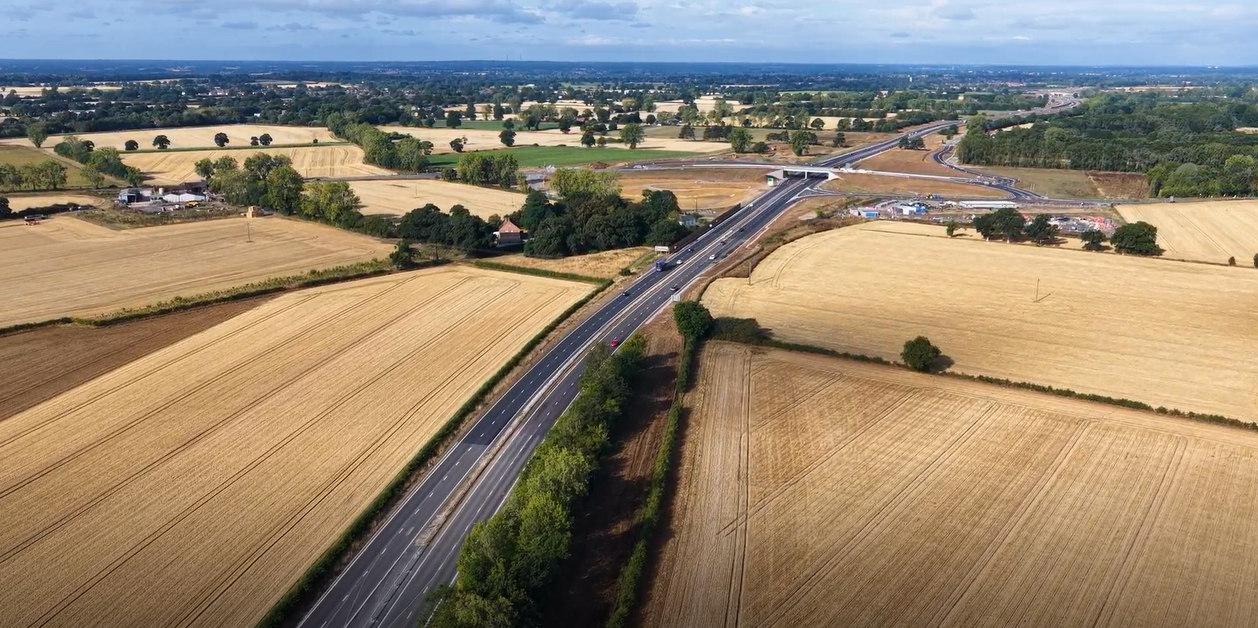
National Highways committed to upgrading it. The scheme involved 2.6km of new dual carriageway, built offline while the existing road stayed open. Two new bridges, a two-tier junction, drainage, a stormwater attenuation pond and utility diversions were all within scope. Including junctions, the full scheme covers around 4km and is valued at between £90m and £100m.
Galliford Try was appointed as East Region Delivery Partner. They brought us in to take on the complete site engineering package.
One site engineering partner from day one
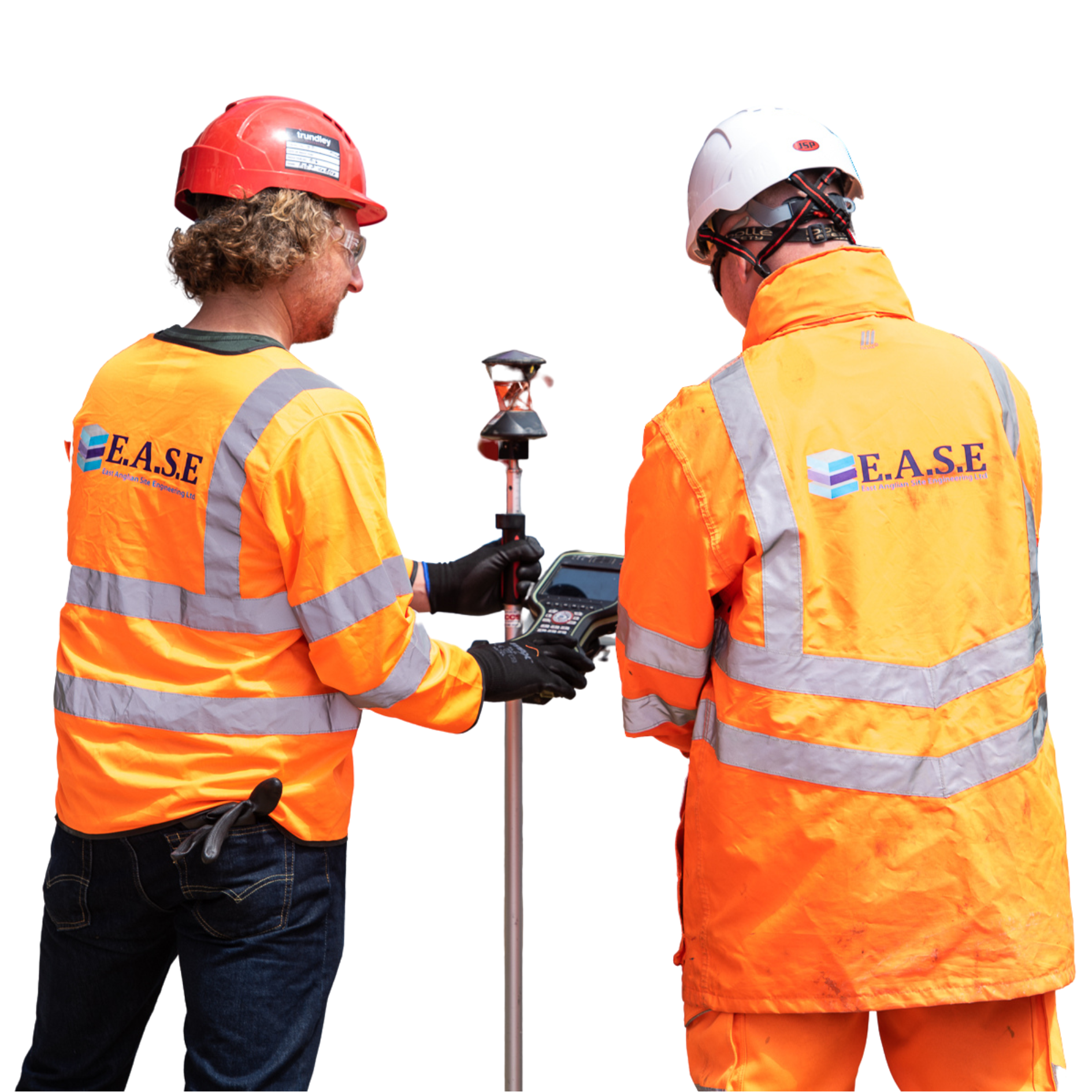
We came on board before main construction began. Getting involved at programme start means survey data, ground conditions and site constraints are understood early. On this scheme, our initial phase covered topographical surveys, trial holes and fencing operations. Accurate, verified data was in place before the main works got under way.
As the programme developed, so did our team. At peak, 13 engineers and two apprentices were working across the site. We also provided sub-agent and agent-level resources, so programme coordination and management support sat within our team throughout.
Matt Raven, our Operations Manager, oversees engineer allocation across all programmes. “Getting the right person for the right job is crucial,” he says. “We work with our clients to plan for future requirements and provide engineers at short notice when the need arises.”
On a programme of this scale, that flexibility made a real difference.
The right engineer at every stage
The A47 scheme required a wide range of expertise. Drainage, earthworks, kerbing, structures, surfacing, signs and vehicle restraint systems all had to be covered, often running concurrently.
Early in the programme, our teams were organised by discipline. As the works developed, the site was divided into sections and our engineers took full responsibility for all disciplines within their area. When one section came under pressure, engineers moved across to support.
“We had engineers who had done dozens of structures and bridges throughout their careers,” Matt explains. “We had engineers who had done hundreds of miles of roads, and others with more experience in quality assurance. Balancing the teams and finding the right person for the right role was critical.”
Meeting a rigorous QA requirement
Highways England’s quality assurance requirements on this scheme were detailed and thorough. We built a team structure that could meet these requirements without slowing progress on site.
Galliford Try introduced a new quality management system for this scheme. We worked closely with their team from the start to understand exactly what was required.
Each engineering team was organised as three people: a site engineer, a trainee or graduate, and a dedicated QA engineer who also managed permits for their section. Where the volume of permits and QA records required additional time, Saturday working was introduced to maintain pace.
The collaborative relationship we had with Galliford Try was crucial in making this element of our package run smoothly.
Meeting fixed deadlines
On a live highways scheme, some deadlines are not moveable.
Road closures have fixed open and close dates. Traffic switches, which involve moving live traffic from existing carriageways to new or temporary lanes, require 24-hour engineering coverage. Those are high-pressure periods where a missed deadline has consequences well beyond the site.
We provided that 24-hour coverage when it was needed. When the programme came under pressure, we provided additional resources at short notice. Our team worked extra days and hours to make sure key dates were met.
Built on trust
Programmes like this depend on the relationship between the teams involved. Over nearly two years, we built a working relationship with Galliford Try founded on openness and mutual respect.
“If we discovered an issue, we felt empowered to bring it to the relevant people’s attention,” Matt says. “And they had the trust in us to know it was worth looking at.”
When priorities changed, we adapted. When Galliford Try needed a different mix of skills, we responded. That trust made it possible to work through challenges without them becoming bigger problems.
“Over the course of this programme we developed a very good relationship with the Galliford Try team, and worked collaboratively throughout.”” Matt reflects.
Closing the skills gap
The construction industry has a well-documented shortage of site engineers. Closing that gap matters to us. Our founder started his own career as an apprentice and knows first-hand what it means to learn on a live programme alongside experienced engineers. That shapes how we work and how we invest in the people coming up behind us.
Live infrastructure programmes are where that gap can start to close. They run for years, cover a wide range of disciplines, and offer early-career engineers the kind of hands-on experience that a smaller job simply cannot.
On the A47, graduate and trainee site engineers were part of our team throughout. Each started by shadowing experienced engineers and moved on to taking responsibility for their own areas across QA, monitoring, setting out and surveying. Working on a programme of this complexity gives early-career engineers practical experience that is difficult to replicate anywhere else.
The outcome
The new carriageway opened to traffic in March 2026.
Galliford Try had one engineering partner, accountable for the full package, from enabling works through to handover. QA ran in parallel with delivery. Deadlines were met, including those with no room for slippage. When the programme needed more, we provided it.
“I think the way we adapted to Galliford Try’s changing requirements and provided the people to suit those changing needs was a good achievement,” says Matt. “That is what this kind of work is really about.”
Work with us on your next scheme
If you are delivering work within a government-backed framework and need a site engineering team that can take on the complete package, get in touch.
Taking on site engineering as a sub-contract package de-risks your programme before work even begins. EASE retains full responsibility and liability for everything our engineers deliver on site.
If you are delivering work within a government-backed framework and need a site engineering team that can take on the complete package, get in touch. We are an approved supplier across our client base, Achilles accredited and ISO certified, and fully insured. We match the right site engineers to your programme from day one and can scale with you as the work develops.
Contact us at info@easeltd.co.uk or call 01603 211808.